Learn about financial support that may be available to help mitigate conflicts between carnivores, livestock, and communities. Applications will soon be available for two new funding programs to help Montanans proactively protect livestock and communities.
applications are available for two new funding Programs help Montanans Mitigate Conflicts Between Carnivores, Livestock, and Communities:
Regional Conservation Partnership Program (RCPP)
All funding through this project has been awarded or is in the process of being awarded through producer contracts. Any changes or relevant updates will be posted here.
National Fish and Wildlife Foundation (NFWF)
The majority of grant funding has already been awarded. An additional Request for Proposals period may open in late fall of 2026 to award the remaining funding. More information will be posted here, when available.
how this works
The NFWF grant programs offer reimbursements to help cover the costs of adopting several types of carnivore conflict prevention tools that have proven effective.
Interested applicants work with Heart of the Rockies Initiative to identify the level of financial and technical assistance they need and discuss project specifics. Contact us at grantinquiry@heart-of-rockies.org to learn more.
Successful applicants enter into an agreement to ensure they receive timely reimbursements for associated project costs.
who is eligible?
Tribes, community/watershed groups, nonprofits, and other entities responsible for implementing carnivore conflict prevention activities are eligible to receive financial and technical assistance.
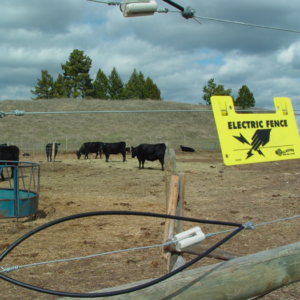
Electric fencing (including electric drive-over mats)
NFWF
Range riding, livestock carcass management & electric fencing
Community outreach and education
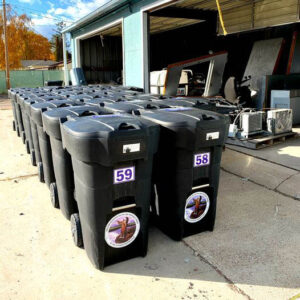
Bear-resistant garbage services and infrastructure, and electric fencing to secure community attractants
Staff capacity for project implementation, including local Bear Smart community coordinators
Funding is available for bear-resistant ranch and residential containers and community refuse facilities that can securely store waste and prevent bears from learning to use human-related food sources.
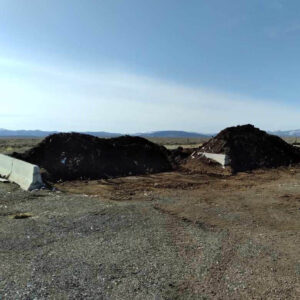
Funding is available for the organized and timely pick up of deceased livestock which helps remove attractants that can otherwise draw carnivores onto properties and rangelands. Funding can also support the use of compositing sites, which when used in conjunction with carcass removal, break down carcasses to further eliminate attractants.
Funding is available to help adopt multi-strand electrified wire and drive-over electric mats to deter bears from accessing attractants such as calving yards, apiaries, chickens and other small livestock, as well as stored grain and crops.
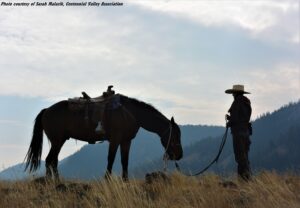
Funding can help deploy more range riders who provide human presence and vigilant monitoring of livestock and carnivores to discourage conflicts across larger tracts of land. They can aid in monitoring livestock health, managing herd movements and dynamics, and support early detection of carcasses.
what program is best for me?
RCPP
>This program is ideal for individual producers and landowners interested in implementing range riding, carcass management, or electric fencing.
>All projects and activities will be covered under contracts with the local NRCS office.
> While groups and organizations are not eligible for RCPP, if individuals are currently participating in a community-led range riding or carcass management program or are interested in doing so, please contact Heart of the Rockies Initiative staff using the contact information provided below to learn how RCPP may support your participation.
NFWF
> This program is best for community groups and organizations aiming to implement conflict prevention programs or Bear Smart and bear-resistant garbage initiatives.
> All projects and activities will be covered under contracts with Heart of the Rockies Initiative.
how do i apply?
We are not currently accepting applications for the remaining NFWF grant funding. If a third Request For Proposals is opened, more information will be listed on this webpage.
However, if you have conflict prevention needs, we encourage you to contact Heart of the Rockies Initiative to discuss other options.
Please send an email to grantinquiry@heart-of-rockies.org with your preferred contact information and any other information you’d like to include. Steve Primm, our Project Manager, will contact you to discuss your particular situation and needs. Steve can also be reached at 406-282-1418.
additional information
is funding only for grizzly bear conflict prevention?
NFWF funds are specifically intended to support grizzly bear conflict prevention activities, and, as such, any proposed projects will be evaluated based on their potential to prevent future grizzly bear conflicts.
RCPP funds are intended to support activities that prevent agricultural conflicts with grizzly bears and wolves.
WHAT ABOUT OTHER METHODS THAT REDUCE WILDLIFE CONFLICTS?
These grants focus on conflict prevention, which is one of several important tools in wildlife management. A holistic approach to reducing wildlife conflicts includes the 4 C’s:
Compensation: Financial payments that cover losses from wildlife damage and reward land stewards for maintaining healthy rangelands and wildlife habitat.
Conflict Prevention: Non-lethal practices that limit attractants, establish human presence, and monitor livestock. Examples include range riding, carcass management, electric fencing, and deterrent devices, which benefit both wildlife and agricultural operations.
Control: Lethal removal of wildlife to reduce damage and achieve population goals.
Collaboration: Involves diverse stakeholders in developing wildlife policies and land management plans, fostering respectful dialogue, shared learning, and mutually beneficial solutions.
WHAT ROLES DO STATE AND FEDERAL WILDLIFE AGENCIES PLAY?
This new funding is a result of new partnerships between Montana Fish, Wildlife & Parks; Natural Resources Conservation Service; U.S. Fish and Wildlife Service; and local, regional, and national nonprofit organizations representing agricultural, wildlife, and rural community interests. Conflict prevention works best when agencies can draw-on local knowledge and learn from the lived-experiences of landowners.
What kind of technical assistance is available to help implement these tools?
Implementation of these tools will be supported by a diverse set of partners, including both state and federal agency staff, as well as NGO staff with expertise in the use of these tools. Partners are committed to assisting participating producers, landowners, and communities in implementing these solutions in ways that will best meet their individual needs.
Can funding be used for guard dogs?
Unfortunately, guard dogs are not an eligible activity under NRCS programs; therefore, RCPP funding cannot be used to support their use. Since guard dogs are nearly always used on individual ranches and not on a community scale, they would not be a good fit for the NFWF funding.
Do electric fences cause wildfires?
Properly constructed and maintained electric fences are highly unlikely to start a fire. There have been a handful of fires that may have resulted from improperly constructed electric fence. Please consult with electric fence professionals for guidance on construction and maintenance of electric fence.
Will this funding cover the maintenance costs of these tools over time?
Funding is intended to support the adoption and expansion of conflict prevention practices. Maintenance costs will be the responsibility of project participants.
Does it matter what size operation I have?
All operations, regardless of size, are eligible for funding as long as they are located within the project areas (generally within occupied grizzly bear and wolf territory). While some larger projects may be prioritized for their broader impact on carnivore conflict prevention, we strongly encourage all operations to apply. Funding may be available for smaller projects as well, and every application will be carefully considered based on its potential to reduce conflicts.
Finding something interesting ?
Email grantinquiry@heart-of-rockies.org to learn more