By Steve Primm, Conflict Reduction Manager
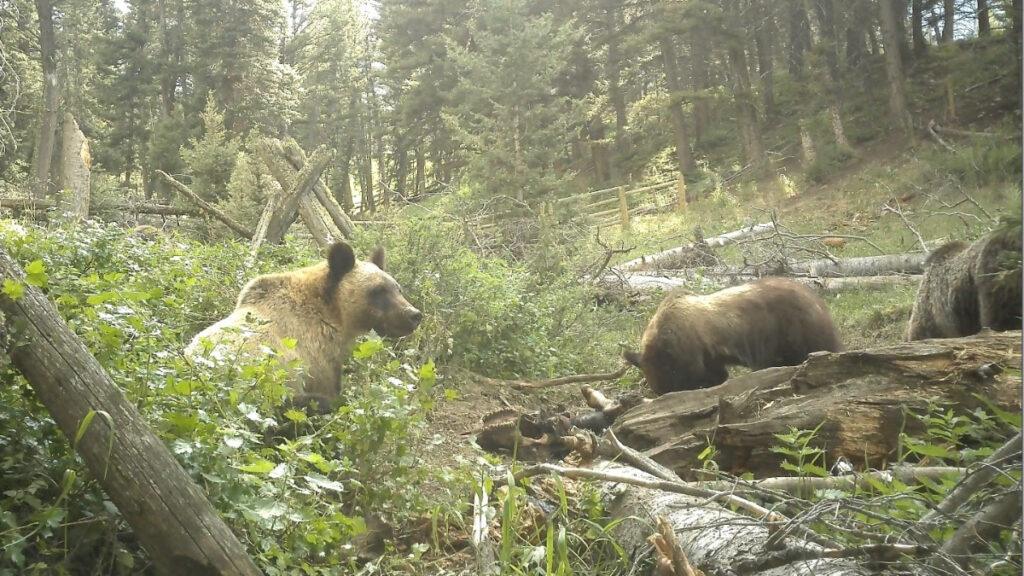
A family of grizzly bears feeding on a cow carcass. Photo courtesy of Steve Primm, Conflict Reduction Manager at Heart of the Rockies.
Montana is ranching country, consistently ranking in the top seven states for beef calf production, with similar standings for lamb and wool. In addition to bringing nutritious meat – along with wool, leather and other animal agriculture goods – to the market, Montana’s ranches provide a great deal of highly productive wildlife habitat. It’s at least seasonal habitat for most of the birds and mammals that live here – which means that occasionally, big predators such as grizzly bears and wolves will roam across private ranchlands.
These large carnivores might be on ranches to hunt or scavenge elk or deer that winter at lower elevations; bears might also be foraging for early emergent plant foods, which are far more digestible for bears when they’re just beginning to grow. Whatever circumstances bring predators onto ranches, the conflict reduction game revolves around keeping them from getting food rewards that would encourage them to hang around livestock operations to prey on cattle or sheep.
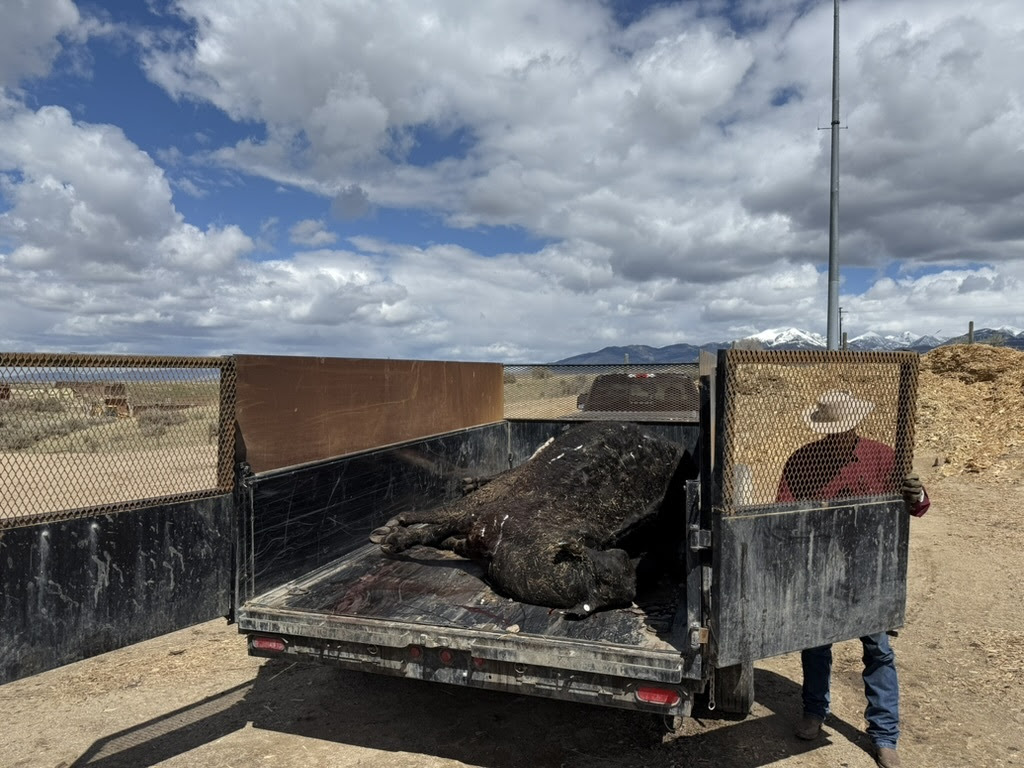
A carcass from a nearby ranch is loaded onto a trailer and brought to a composting facility. Photo courtesy of Steve Primm.
One of the major unnatural food rewards that draw and hold carnivores on ranches is livestock carcasses. It’s a reality of any ranching operation: some livestock will die, be it from weather, difficulty in giving birth, illnesses, old age, or even an abrupt change in diet as winter’s dry hay rations give way to the first green grass of spring.
Livestock carcasses can be a major calorie jackpot for a hungry grizzly or wolf. A mature bovine could supply well over 500,000 calories of high protein food – more than a lone bear or a pair of wolves could consume on their own in a week or even two.
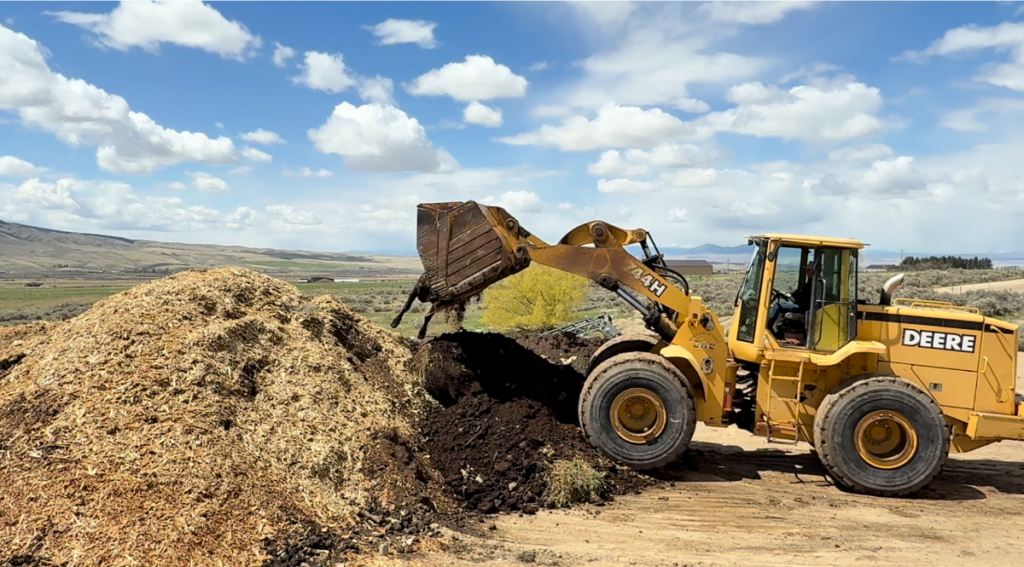
Once an animal enters the compost facility, heavy equipment is used to transport it to the appropriate location. Photo courtesy of Steve Primm.
Short term, livestock carcasses may seem like a huge boost. But the downsides dramatically outweigh any benefit: carcasses lure predators into places they’re likely to get into trouble, and hold them in the area for days. The more time bears and wolves spend in proximity to livestock operations, the more likely they are to go from scavenging to preying on cattle and sheep. Worse, when grizzlies frequent areas where people live and work, the risk of a dangerous close-range encounter increases substantially.
To reduce this risk, ranchers, conservationists, and wildlife managers have worked together for over 20 years in western Montana to develop community-scale livestock carcass removal programs: a free or low cost service that periodically collects livestock carcasses from ranches, transporting them to either a landfill or a secure carcass composting facility surrounded by high-voltage electric fence.
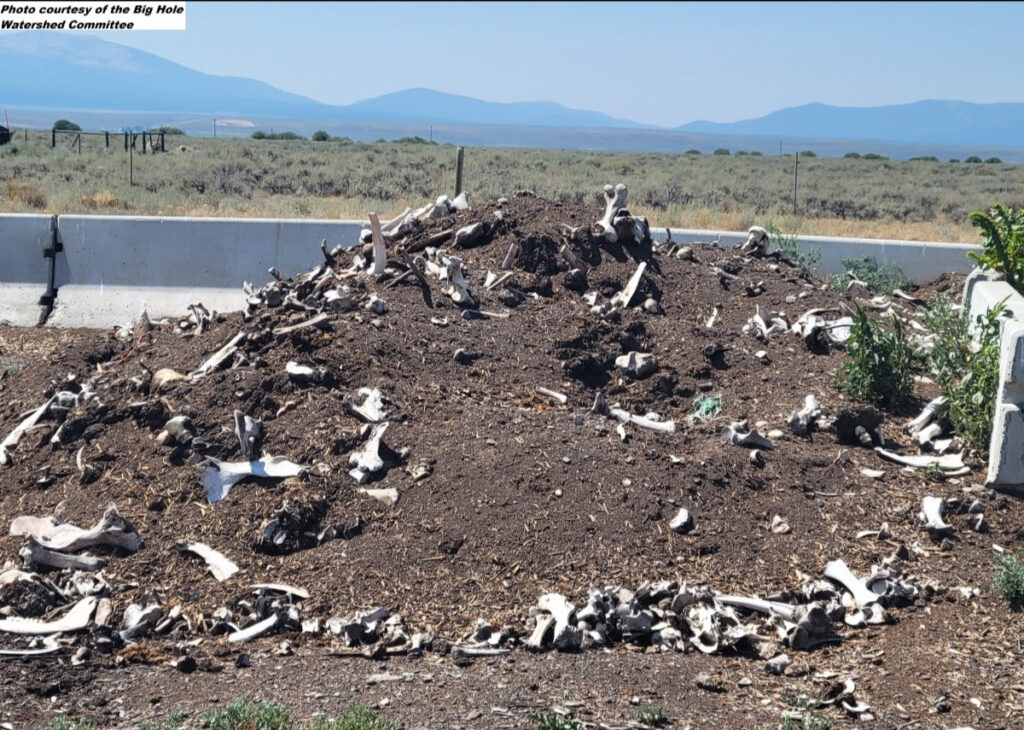
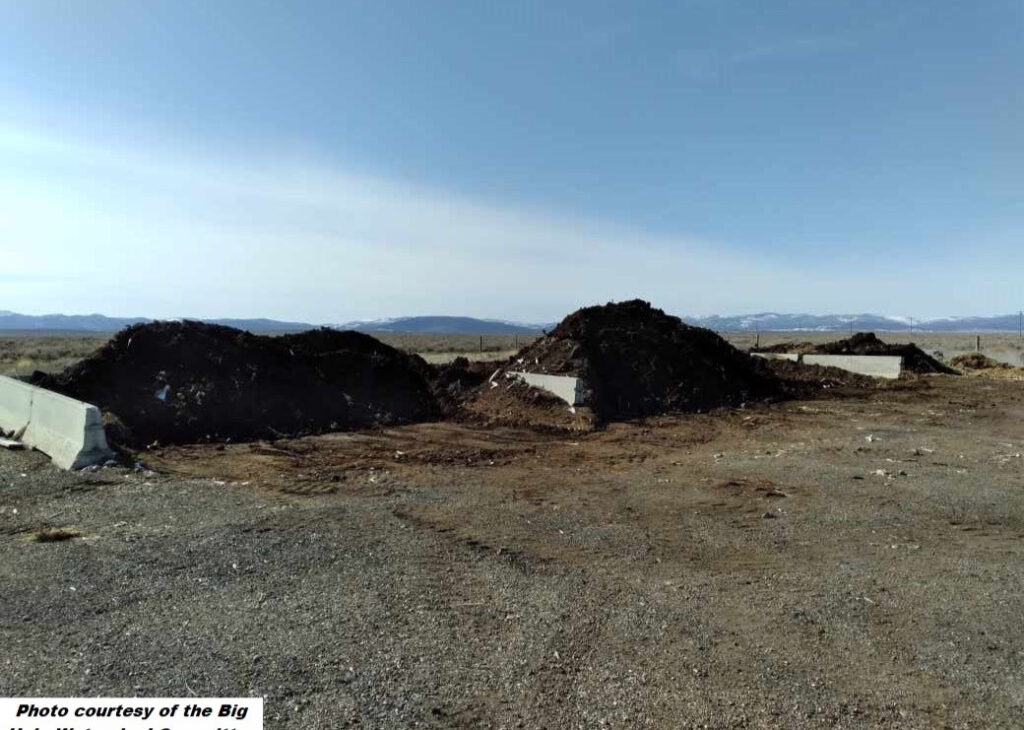
Different stages of the composting process from the facility in the Big Hole. Photo courtesy of Big Hole Watershed Committee.
Heart of the Rockies Initiative’s Carnivore Conflict Reduction team is proud to build on this foundation of innovation and hard work to sustain and expand carcass removal programs throughout grizzly range in Montana. This support ranges from technical assistance and help with regulatory hurdles, to providing timely, multi-year funding to locally-led efforts in places where grizzlies and ranching overlap.